Temporary Advices
This FAQs answer sheet includes a number of questions from seafarers who have contacted the SeafarerHelp team.
New guidelines to avoid or manage an outbreak of coronavirus on board ships are now available.

We can pick up the Covid-19 by touching surfaces contaminated with the new coronavirus.

Psychotherapists are ready to put their knowledge into practice to help you manage what may be left now, so you can be #goodagain.
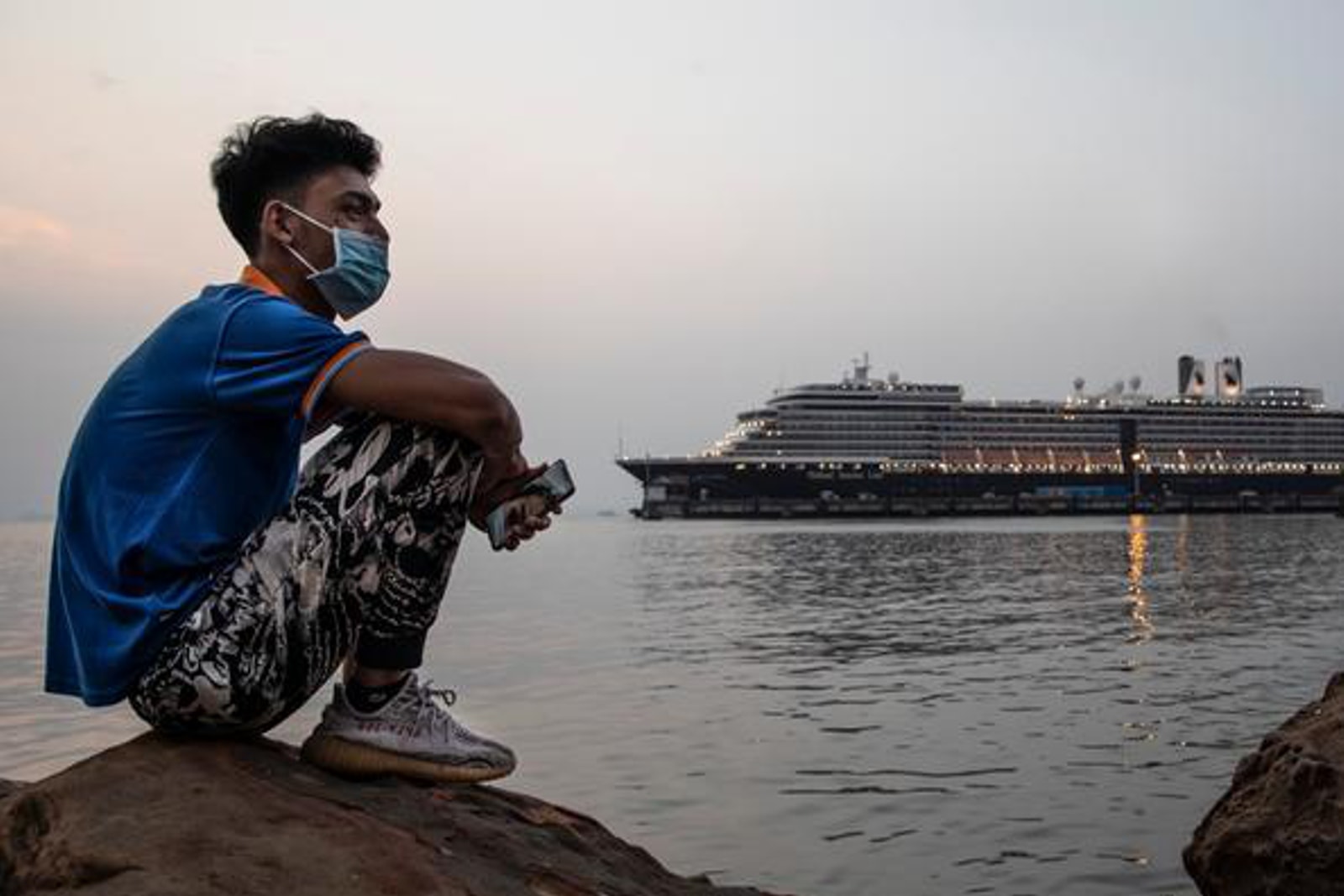
Due to the Covid-19 pandemic, several protection rules were imposed during Seamen's Club activities:
• Free carriage of the seamen from ship to club back and port.
• Frequent desinfection of the vehicles (handles, steering wheel, dashboard).
• Hydroalcoholic gel and masks available in the vehicles.
• Hand disinfection.
• Mask is mandatory.
• 4 seamen per vehicle.
• No seamen on the front seat (besides the driver).
• Carriage of seamen of a single ship (no mixing with the crew of another ship).

If you have arrived in Constanța and, together with your colleagues, would like to go out to the city, call us at +40 723 000-555. We are waiting for you!

Do not exchange money except at authorized exchange centers!

If you use individual transport, look for authorized taxi cars only and pay attention to the fare.

If you are out in town, it is preferable not to be alone.

Do not buy alcoholic beverages to bring them into the harbor.

Pay attention! There are some crooks who pretend to be from Seamen's Club. They will ask you for money in various forms and then disappear. Ignore them or call the police. Seamen's Club representatives will never ask you for money.
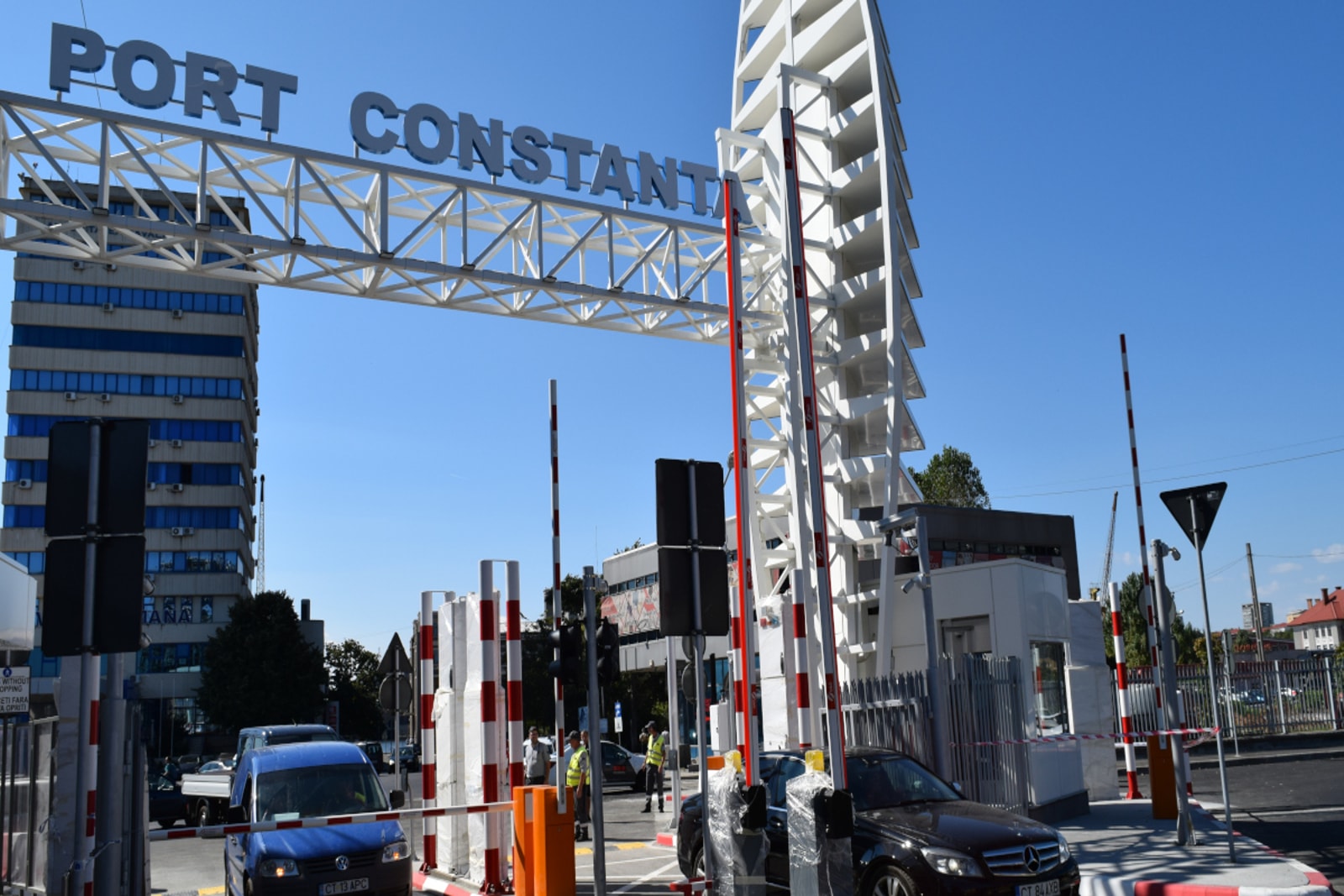
If you are not European, you can use ONLY GATE 1 to exit and enter in the port.

SINGAPORE
Extreme weather and floods in Europe. Storm in the Biscay. Powerful typhoons and hurricanes raging right where ships do most of their sailing. Key ports being closed down for weeks. Railroads in the US which are useless because the weather has ripped up the tracks or torn down terminals.
This was the bleak scenario painted by ONE Chief Executive Jeremy Nixon of the weather in 2018, which forced container shipping out of service for a surprising amount of time last year.
At TOC Asia, during the Singapore Maritime Week, Nixon explained in detail how the bad and harsher weather impacted the liner company in 2018, but which naturally affected the industry overall. Last year, for instance, the Port of Shanghai was closed for 28 days within a six-month period between April and August due to extreme weather. This resulted in noticeable delays and large costs for shipping companies as well as shippers who were unable to have their goods delivered.
The problem with the weather is further underlined by the fact that the major ports in China are strained on capacity, and with the ever-larger container ships that have to put down anchor and wait for better weather, it becomes virtually impossible to catch up on the delays.
Impacts the major tradelanes
"Weather has become a factor we increasingly need to calculate with. Typhoons go through major shipping lanes. Last year we also saw them emerge much farther north, by China, Vietnam and Japan. This has a significant impact on shipping and is one of the reasons schedule reliability is so low," said Nixon, who also cited the situations with extreme weather in Europe and the US.
Like several competitors, ONE has to strengthen its buffer with extra ships and by pulling ports from its sailing schedule, in an attempt to avoid delays. Furthermore, the liner company has to sail faster than planned in order to regain lost time.
"In August last year alone, Shanghai was closed for eight days due to bad weather. Regardless of the reason, global warming is happening, and this means that ports have to close more often. Weather is a factor we increasingly have to look at," said Nixon.
In this sense, he also set the agenda for a panel discussion later in the day, as part of Sea Asia, between several of the shipping sector's other leading executives, including Maersk COO Søren Toft and BW Group's Andreas Sohmen-Pao.
They were set to discuss, among other issues, what the shipping industry can do to comply with the agreement the IMO reached a year ago to reduce the shipping sector's CO2 emissions by half before 2050.
Could get even worse
But where it has perhaps until this year largely been a matter of "committing on behalf of the coming generations", Nixon explained how climate change is already now impacting the shipping sector's daily operations, and that it will likely only get worse, at least in the short term.
ONE – which is part of The Alliance – for instance blames the weather for the fact that it is so difficult for the alliance, and for the rest of the sector as well, to deliver a better schedule reliability performance.
Studies which ShippingWatch has reported on in the past conclude that there could be a link between the harsher weather, with more lightning and thunder, and ships' emissions. And looking at the major tradelanes, for instance Asia to Europe, this is also where the bad weather occurs. According to a study, there is twice as much intense thunder over this shipping route compared to shipping routes in locations with similar climate.
The shipping sector has been accused of being late to get started on its climate initiatives, which are not least aimed at reducing greenhouse gas emissions. After being left out of the Paris climate accord, the industry did not reach an agreement until last year at the meeting of the IMO's Marine Environment Protection Committee, MEPC.
Long process in store
However, the process to get there will be long. Right now, for instance, EU member states are discussing how to even measure emissions from a ship. And Maersk, the world's largest shipping group, has set its own target to become CO2-neutral and be fully rid of fossil fuels by 2050 at the latest.
BW Group Chairman Andreas Sohmen-Pao notes that it is generally a difficult process to reduce fossil fuels, as 90 percent of the energy currently used comes from oil or oil-derived products.
"I'm struggling to find out how to reach the goal. There are really only three alternatives. Bio fuel, batteries or hydrogen. None of them are even close to reaching the scale we need. So the big question is: How do we do it," said Sohmen-Pao.
As for the sulfur content in exhaust gases, an agreement has been reached to reduce content in emissions from each individual ship to no more than 0.5 percent, starting on Jan. 1, 2020.